
When most people first encounter Reiki, the conversation usually centers around techniques. There is often a strong focus on hand positions, symbols, attunements, or different systems and levels of training. While those aspects have their place, I think they can sometimes distract from something much more foundational.
The deeper I’ve gone into Reiki practice, the more convinced I’ve become that the real heart of Reiki is not technique. It is the cultivation of how we live.
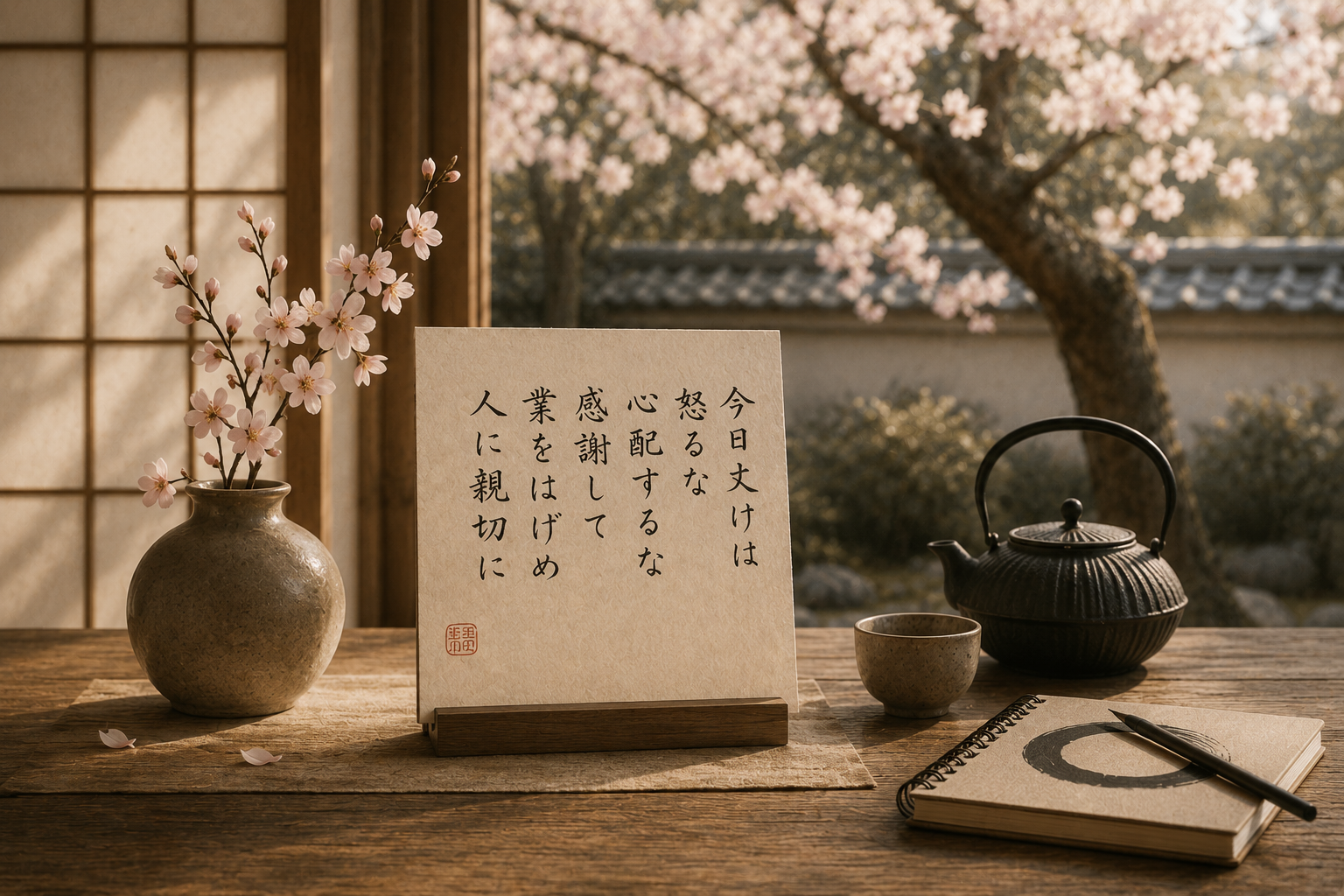
At the center of that cultivation are the Five Principles, or the Gokai:
Just for today, do not anger.
Just for today, do not worry.
Be grateful.
Practice diligently.
Be kind to others.
These principles are often treated as simple affirmations or introductory teachings for beginners. People recite them before practice or display them on a wall, but they can easily remain conceptual. What I’ve come to realize is that the Gokai are not secondary to Reiki practice. In many ways, they are the practice itself.
They bring Reiki out of abstraction and into daily life. They shift the focus away from spiritual experiences and back toward awareness, behavior, emotional regulation, discipline, and presence. They continually ask a much more difficult question than “What techniques do you know?”
They ask: How are you actually living?
That question has become increasingly important to me over time because it is very easy to become interested in spirituality while remaining disconnected from ourselves in ordinary life. It is possible to collect teachings, certifications, practices, and ideas while still struggling deeply with worry, emotional reactivity, restlessness, avoidance, or the inability to remain present.
I don’t say that critically. I say it because I’ve experienced it myself.
For a long time, I approached spirituality primarily through seeking. I was searching for peace, clarity, healing, awakening, transformation, and deeper states of consciousness. Some of those experiences were genuinely meaningful and life-changing. But eventually I had to confront something uncomfortable: extraordinary experiences were not enough to fundamentally stabilize the way I lived.
What ultimately began changing me more deeply were not dramatic moments. It was returning to simple practice consistently. It was learning to observe my own mind honestly. It was recognizing how often I lived in worry, striving, tension, distraction, and resistance to the present moment.
The Five Principles slowly became less philosophical and more practical.
They became mirrors.
The Difference Between Knowing and Living
One of the things I appreciate most about the Gokai is how direct they are. They are simple enough that almost anyone can understand them immediately, yet deep enough that you can spend an entire lifetime practicing them.
Most people already know that chronic anger creates suffering. Most people understand intellectually that gratitude matters or that constant worry affects mental and physical health. The issue is usually not lack of information.
The issue is embodiment.
There is a profound difference between understanding a principle and living it consistently. I think this is where much of spiritual practice becomes real. It is one thing to admire the idea of presence or compassion. It is another thing entirely to remain grounded and aware during stress, conflict, disappointment, fear, or uncertainty.
The Gokai continually return us to this lived dimension of practice.
They ask us to pay attention to how we respond to life rather than how we present ourselves spiritually. That distinction matters because modern spirituality can easily become performative. It can become another identity, another form of self-improvement, or another endless search for experiences.
The principles simplify things considerably. They bring the practice back into ordinary life.
How do you speak to people when you are stressed?
How do you relate to uncertainty?
How do you care for your body and mind?
Can you remain present during ordinary moments?
Can you return to yourself when you become reactive or overwhelmed?
This is where Reiki begins to move beyond technique and become something embodied.
“Just for Today” and the Practice of Returning
The phrase “Just for today” has become increasingly meaningful to me over the years. At one point, I mostly understood it intellectually. Now I experience it more as a form of grounding.
So much of suffering seems connected to abandoning the present moment. We replay the past, project ourselves into the future, worry about what might happen, compare ourselves to who we think we should be, or become consumed by the pressure to arrive somewhere else spiritually or emotionally.
“Just for today” interrupts that momentum.
It brings practice back to something immediate and human.
Not forever.
Not perfectly.
Not as some final spiritual achievement.
Just today.
There is something deeply compassionate about that approach. The principles are not demanding perfection. They are inviting sincerity and consistency. They acknowledge that human beings fall out of alignment constantly. We become distracted, reactive, fearful, exhausted, emotionally overwhelmed, or disconnected from ourselves.
The practice is not never losing balance.
The practice is learning how to return.
That shift changed a lot for me personally. For a long time, I thought spiritual growth meant reaching some stable state that would permanently remove suffering, fear, or inner conflict. But eventually I realized that much of the path is quieter than that. It involves learning how to meet ourselves honestly and repeatedly return to awareness rather than continually abandoning ourselves for some future version of who we think we should become.
The Five Principles support that return beautifully.
Reiki as Psychological and Spiritual Practice
I think one of the reasons the Gokai feel so relevant today is because they operate on both a psychological and spiritual level simultaneously.
The principles are not merely spiritual ideals. They influence the nervous system, emotional regulation, perception, and behavior. They affect how we relate to ourselves internally and how we move through daily life.
“Do not worry” is not simply a moral instruction. It is an invitation to become aware of how much time we spend mentally living in imagined futures. It encourages us to notice how chronic anxiety pulls us out of the present moment and keeps the body in a constant state of tension and anticipation.
Similarly, “Do not anger” is not about suppressing emotion or pretending to be peaceful. Anger itself is natural. The practice is learning how not to become consumed by reactivity. It is learning to create space between stimulus and response.
Over time, this awareness changes the quality of our inner life.
The more consistently we practice returning to awareness, the more we begin noticing our patterns in real time. We recognize when we are spiraling mentally, when we are abandoning the present moment, when we are reacting unconsciously, or when we are disconnected from ourselves physically and emotionally.
That awareness alone can be profoundly transformative.
Not because it makes us spiritually superior, but because it creates the possibility for a different response.
Nervous System Regulation and Simplicity
I also think the Gokai matter because modern life places enormous strain on the nervous system.
People are overstimulated constantly. There is very little silence, very little stillness, and very little genuine rest. Most people move through life carrying chronic mental tension without even realizing it. The mind rarely stops projecting, comparing, anticipating, analyzing, or consuming.
In that environment, the simplicity of Reiki practice becomes incredibly valuable.
Simple breathing.
Hands on the body.
Meditation.
Self-observation.
Returning to awareness.
Reflecting on the principles.
Sitting quietly for a few moments before reacting impulsively.
These practices are not dramatic, but they gradually create internal stability over time. They teach the body and mind how to slow down. They create moments of regulation in the middle of overstimulation.
This is one reason I’ve become less interested in spiritual intensity and more interested in consistency. Intense experiences can be meaningful, but they are often temporary. What changes us more deeply is usually repetition.
Small daily practices repeated over months and years begin shaping the nervous system differently. They create familiarity with stillness, awareness, and presence. The body slowly learns that it does not have to remain in constant vigilance or psychological momentum.
I think this is part of what people are actually searching for beneath much of modern spiritual seeking. Many people are not truly searching for more stimulation or complexity. They are searching for rest, grounding, clarity, and reconnection with themselves.
The Gokai support that process in a very grounded way.
Practice Diligently
Out of all the principles, “Practice diligently” may be the one I relate to most strongly now.
At one time I interpreted discipline primarily as intensity or effort. Over time my understanding changed. Real practice is usually much quieter than that.
Practice diligently means continuing to return even when life feels ordinary. It means maintaining relationship with practice even when inspiration fades or when you are not having meaningful experiences.
Some days practice feels nourishing and deeply connected. Other days it feels simple, repetitive, or even difficult. The value is not always in how profound the experience feels in the moment. Often the value is in the continuity itself.
This is one of the biggest differences between practice and consumption.
Consumption is driven by novelty. Practice is built through repetition.
The mind often wants new information, new experiences, and new stimulation. But much of spiritual maturity seems to involve rediscovering the depth within simple things repeated sincerely over time.
Breathing.
Awareness.
Self-Reiki.
Meditation.
Returning to the principles.
Learning how to remain present during ordinary life.
None of these are especially flashy. But they gradually shape how we live.
Reiki Beyond the Treatment Table
One thing I’ve reflected on often is that Reiki can easily become confined to sessions or designated practice time. But the principles continually pull the practice back into the rest of life.
How do we respond during conflict?
Can we remain grounded when things feel uncertain?
Can we recognize when we are becoming emotionally reactive?
Can we treat ourselves and others with patience when we are overwhelmed?
These moments are part of practice too.
In many ways, they may be the most important part.
Because ultimately, the value of Reiki is not measured by how spiritual we appear or how many techniques we know. It is reflected in the quality of our relationship with ourselves, other people, and daily life.
That is why I increasingly feel that Reiki is less about becoming someone special and more about becoming more honest, aware, grounded, and present.
The Five Principles support exactly that kind of development.
The Gokai as a Lifelong Practice
I no longer see the Five Principles as beginner teachings that we eventually move beyond. If anything, they seem to become more meaningful over time.
The longer I practice, the more I realize how easy it is to fall out of alignment. It is easy to become distracted, reactive, disconnected from the body, caught in worry, emotionally overwhelmed, or absorbed in striving.
The principles continue bringing me back to something simpler and more stable. Over time, Reiki has become less about trying to reach perfect states, perform spirituality, or chase constant experiences of peace and connection. Instead, it has become a quieter practice of returning — returning to awareness, returning to the body, returning to the present moment, and learning how to meet ordinary life with a little more honesty and steadiness each day.
I think this is why the Gokai remain so foundational. They are not trying to impress us intellectually. They are trying to shape how we live.
And honestly, that feels much more meaningful to me now than chasing extraordinary experiences ever did.
Returning to What Matters
The deeper I go into Reiki practice, the more I find myself returning to the same simple realization: transformation happens slowly through lived experience.
Not through accumulating spiritual ideas.
Not through collecting techniques.
Not through constantly searching for the next breakthrough.
It happens through consistency, honesty, awareness, and practice lived over time.
The Five Principles support that kind of transformation because they continually guide us back into direct relationship with our own lives. They ask us to observe how we think, how we react, how we relate to uncertainty, how we treat other people, and whether we are actually present within the life we already have.
That is why I believe the Gokai are the real foundation of Reiki.
Everything else supports them.
The techniques matter. The practices matter. The teachings matter. But without embodiment, Reiki can easily remain conceptual or performative. The principles continually return the practice to something lived, grounded, and human.
And in a world that constantly encourages distraction, striving, and disconnection, that kind of return feels increasingly important.


